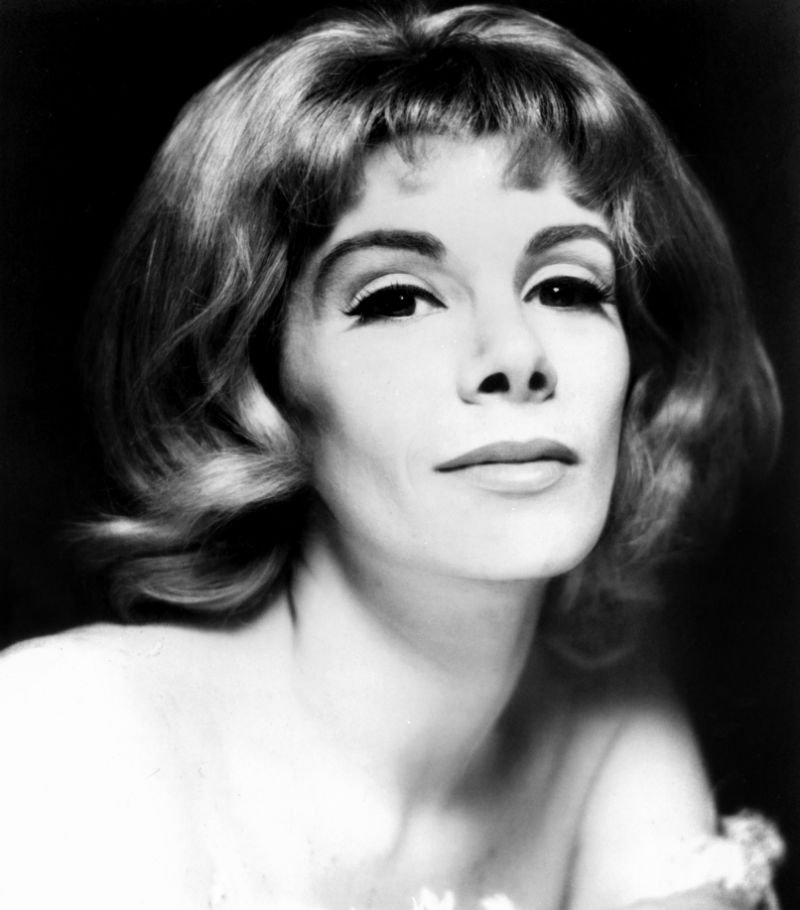
In 1985, a confidential memo circulated among NBC’s top executives. On it were roughly ten names. These were the people the network considered capable of taking over The Tonight Show whenever Johnny Carson finally retired.
Joan Rivers read the list. She’d been Johnny’s permanent guest host for two years by then. And it had been twenty years since the night he told her, on the air, that she was going to be a star.
Her name wasn’t on it. Not tenth. Not anywhere.
What happened next is usually remembered as the unanswered phone call – the famous reason Johnny never forgave her. But that call was only the ending. This is the story of everything that led up to it: the network politics nobody saw, and the secret handshake with a fledgling network called Fox.
It ends in one week of May 1986, when twenty-one years of friendship collapsed overnight. What that week left behind was two versions of the truth, his and hers. Forty years later, they still don’t match.
The friendship itself, all twenty-one years of it, laugh by laugh, is in the video below. This is what was happening behind it.
The Night No Tape Survived
February 17, 1965. A comic had bombed on The Tonight Show the night before, and Bill Cosby, who’d seen Joan work the Village clubs, told the booking producer she couldn’t possibly be worse than the man they’d just aired. She was 31, and she’d been Joan Molinsky of Larchmont a lot longer than she’d been Joan Rivers.
A decade in the Greenwich Village rooms alongside Woody Allen and George Carlin, and by her own telling never one of the guys; when the men went off for sandwiches after the sets, nobody asked her along. The show had turned her down seven times. Three weeks before the booking, her own agent had gently suggested law school.
Johnny sat on the other side of that arithmetic. Barely three seasons into the job, he was already the man whose final ten minutes could do for a comic what a decade of club work couldn’t.
Every agent in New York kept one eye on his couch. They slotted Joan into that last ten-minute stretch, the worst real estate on the show, and billed her as a funny girl writer rather than a comedian. By her count, that made her the only stand-up in the show’s history who never did a stand-up routine on it.
No tape of that night survives. What survives is her account of how it ended: Johnny, on the air, telling her she was going to be a star! And it was the night made her keep returning Johnny’s stage for the next two decades, and those moments are all in the video above. The talent was hers; ten years of half-empty rooms had sharpened it into the act Cosby vouched for… The door was his.
What the cameras never carried was the off-stage half of the friendship. When Joan got her own daytime show in 1968, Johnny came on as her very first guest. The man she married that decade, Edgar Rosenberg, had come into her life through Carson’s world.
And for eighteen years she repaid all of it with a loyalty none of the men around her practiced: other networks came offering shows of her own, and she said no, every time, and stayed on his couch. In 1983 the show made it official and gave her a title no woman had ever held there: permanent guest host.
The One-Year Contract
The title sounded permanent. The paper wasn’t. Her contracts ran one year at a time, even as her weeks in the chair kept drawing numbers the executives couldn’t ignore.
Then came the renewals of 1985. Johnny signed for two years. Joan’s offer came back at one. She wrote about that moment the following spring, in a remarkable essay for People: “That shook me to the very roots of my confidence.”
In the same essay she counted the smaller signals — invitations that never came, and the standing instruction that problems were never to be brought to Johnny himself. The star was kept insulated. Everyone’s troubles stopped at his door.
Somewhere in there, somebody slipped her the list. Leslie Bennetts, whose biography of Rivers dug deepest into this period, describes what Joan was handed: a supposedly secret memo naming roughly ten people NBC could imagine behind that desk when Johnny stepped down.
Joan read the names once, then again. All ten were men. She had been sitting in the chair, to those ratings, for two years, and her name appeared nowhere. When the list reached the press in June of 1985, NBC answered that no such list existed. Joan, by her own account, had already read it twice.
Her deal was set to run out the following July. By winter, her agents were listening to other offers, and one of them came from a network that didn’t exist yet.
The Secret
Barry Diller’s people came to Joan in early 1986. Fox Broadcasting had no programs, barely any stations, and a plan to become America’s fourth network, with Joan Rivers as its first face. The wire services reported the deal at $10 million; her side later remembered it as $15 million over three years.
Either number made her the first woman in American television to get her own late-night show. Edgar Rosenberg, her husband and manager, would produce it.
Her manager Sandy Gallin told her, years later on the radio, that he’d laid out exactly two ways to do this. Tell Johnny everything and how scared she was, how hard the choice was – and ask him to understand it. Or call him, tell him plainly, and offer to stop guest hosting that same day. She did neither.
Edgar counseled silence until the ink dried: if word leaked, the deal could die. Joan said later she also feared Johnny might cut her off the moment he heard, no matter how he heard it. So through the winter and into the spring, the biggest decision of her career stayed inside her own house.
The negotiation closed as her twenty-first anniversary on the show came around. Nobody had told Johnny.
Nine Days in May
April 25, 1986. Joan walked out as Johnny’s guest wearing the dress from her 1965 debut, there to talk about her new memoir about the night he discovered her. If you were watching that Friday, you saw the last time the two of them ever shared a stage. Neither said goodbye. He signed off expecting to see her Monday, and that exchange is in the video above, worth watching with what you now know.
Within days, Fox called a press conference to announce its first program: The Late Show Starring Joan Rivers.
What happened around that announcement depends entirely on who’s telling it. In Joan’s telling, repeated for the rest of her life, she called Johnny before he could hear it anywhere else: “he hung up on me – and never, ever spoke to me again,” she wrote decades later, adding that he then denied she’d ever called at all.
In Henry Bushkin’s telling, Carson’s own lawyer got the first call, from a reporter: “I didn’t know, and I immediately called Johnny,” Bushkin said. In Mark Malkoff’s account, built from Carson’s inner circle, the job fell to NBC president Brandon Tartikoff, who phoned the star to break it.
The Associated Press that week put it simplest: Carson learned of the competition from the news media. Four versions of one moment. The friendship had run twenty-one years; its ending took about nine days, and the people closest to it never agreed on what happened inside them.
The men around Johnny always insisted the wound wasn’t the rival show. Comics had been leaving to compete with him for two decades, and his custom never changed: he had them on to wish them luck before they premiered, and often again after their shows died.
It wasn’t the competition, his side said. It was the secrecy. Peter Lassally, the show’s executive producer, put their view in one sentence: “She couldn’t have made a worse decision” – because if she’d come to Johnny during the negotiation, Lassally believed, Johnny would have sent her off with his blessing.
In public, Carson allowed himself a single line wishing her well in whatever she did. Inside the show, according to longtime head writer Raymond Siller, the decision was to go silent – no jokes, no feud, nothing. Her remaining guest-host weeks were canceled, and a young comic named Garry Shandling took the dates.
Why Johnny Carson Never Forgave Her
The Late Show premiered on October 9, 1986, with Elton John at the piano. It struggled almost from the first week. Stations across Carson country refused to carry it, and guests became strangely hard to book, out of loyalty to Johnny, or fear of losing his couch, though his staff denied any blacklist ever existed.
When Joan’s producers offered Tonight Show talent coordinators double their salaries to jump ship, people in Johnny’s circle described it afterward as a second wound on top of the first.
Fox wanted Edgar off the show by spring. Joan refused to fire her husband, and in May 1987 the network fired them both. One of the guest hosts who replaced her, a comic named Arsenio Hall, walked out of that wreckage into a show that redrew the late-night map, a story for its own article someday. Joan’s road back was longer.
Three months after the firing, Edgar Rosenberg took his own life.
Joan went back to work because she had to; there were debts she hadn’t known about, and a daughter at home. The rebuild took years and became its own legend: a daytime show, an Emmy, an empire built on QVC. The one door that stayed shut was the one on Alameda Avenue.
When Carson said goodbye in 1992 and three decades of famous friends came through his studio in the final weeks, Joan wasn’t asked. She watched from her own daytime desk and told her audience what that felt like — her own words, on tape, in the video above.
Johnny Carson died in January 2005, and Joan praised him that week as the “best straight man in the business.” Nine years after that, on February 17, 2014 – forty-nine years to the day since the night he told her she’d be a star – Jimmy Fallon put her on his very first Tonight Show.
Her statement to the press was pure Joan: “I’ve been sitting in a taxi outside NBC with the meter running since 1987.” She came back that March for the full interview in the video above, and she died that September, at 81.
Some of this can’t be settled, and it’s better said than smoothed over. NBC denied, then and ever after, that any successor list existed; Joan maintained to the end that she’d read it, in her People essay, in her memoirs, and in the 2012 Hollywood Reporter piece where she told the phone-call story one last time.
The deal was reported at $10 million in 1986 and remembered as $15 million later. Carson said no call ever came; Joan said two did, and that both ended the same way. At least three people claimed to be the one who told Johnny first. The only two witnesses who could sort it out never spoke again, and this article hasn’t pretended to sort it for them.
Their two versions agree on almost everything – the debt she owed him, the laughter, the twenty-one years. They part at a single fact: whether his phone rang before the news broke. Forgiveness, in the end, hung on that one small disputed fact, and neither of them lived to settle it.
If this story brought back a night you remember, the channel tells one like it every week; the clips themselves are all there.
For one backstage story like this in your inbox each week, join The Late Desk letter.
1 thought on “Why Johnny Carson Never Forgave Joan Rivers”