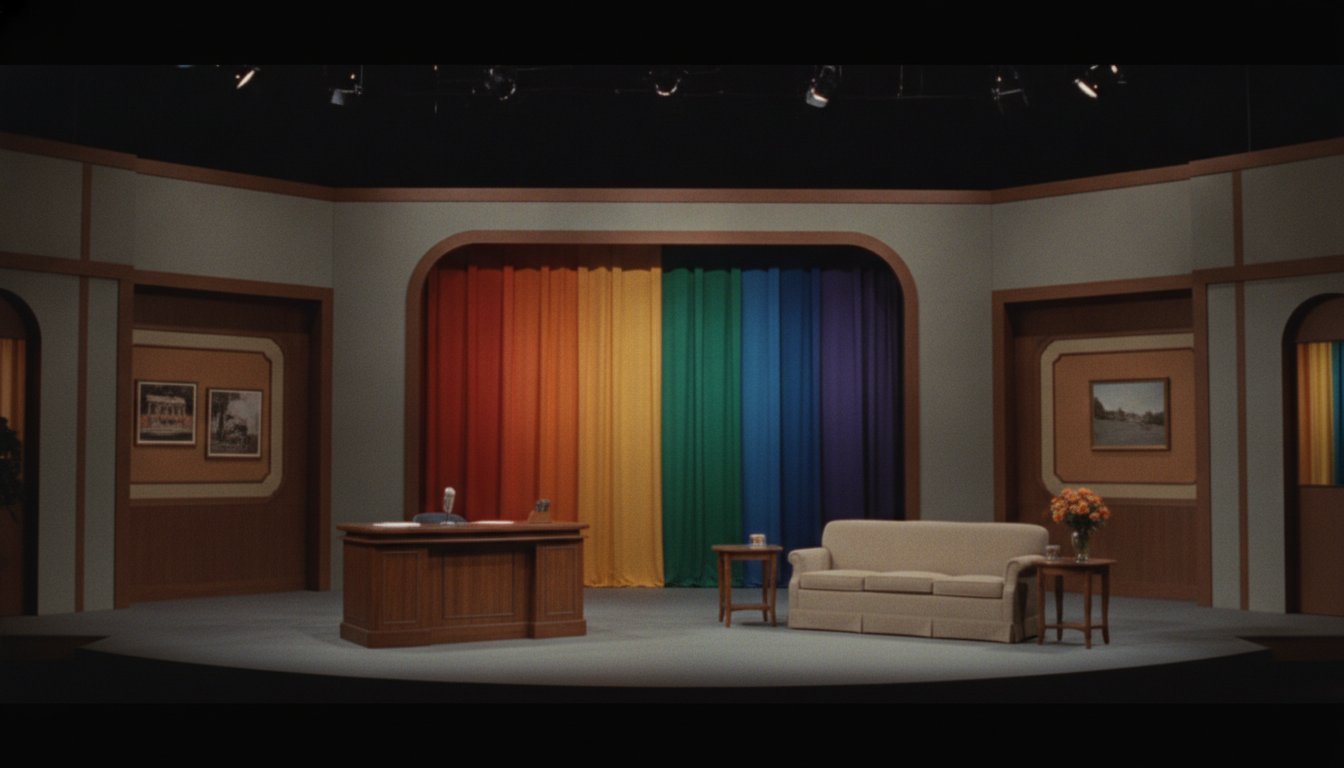
On May 1, 1972, the curtains at NBC’s Studio 1 in Burbank didn’t just open for another broadcast. They signaled the end of an era for New York and the birth of a Hollywood empire. Johnny Carson’s first show in the LA studio wasn’t merely a change of zip code; it was a high-stakes gamble that many insiders feared would strip the program of its intellectual edge. While the move is often summarized in a few dry sentences in history books, the atmosphere behind the scenes was thick with a mix of nervous energy and the smell of fresh California paint.
You likely recognize that this transition changed late-night television forever. However, the specific details of that night, from the legendary guest list to the subtle shift in the show’s DNA, are often lost to time. In this deep dive, we’ll peel back the curtain on the drama of the move and the cultural seismic shift that occurred when the King of Late Night traded the subway for the freeway. We’ll explore the specific guests who shared the couch and how the legendary Studio 1 changed the way America watched television before bed.
Key Takeaways
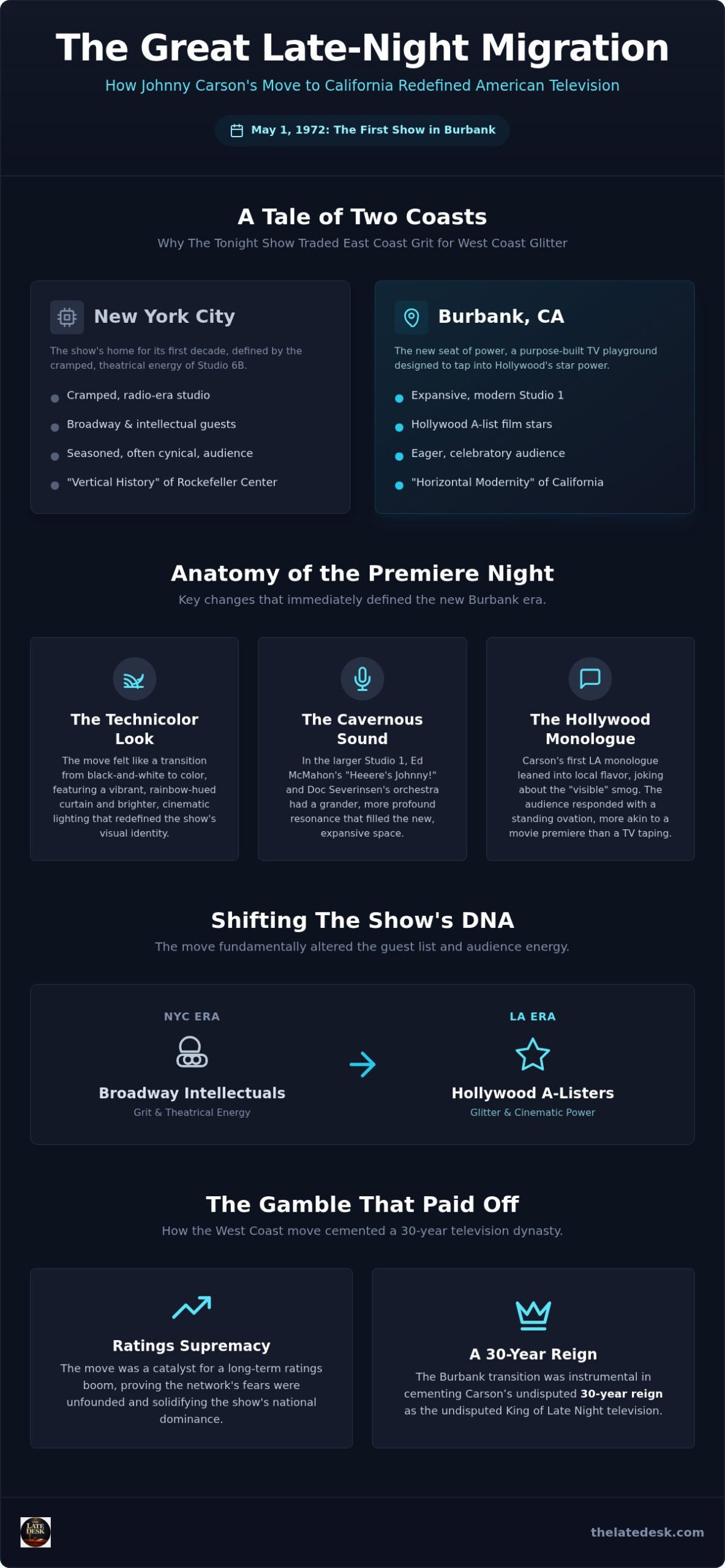
- Uncover the strategic reasons behind the Great Late-Night Migration and why the grit of New York’s Studio 6B eventually gave way to the allure of the West Coast.
- Step inside the electric atmosphere of johnny carsons first show in the la studio to see how a new set and brighter lighting redefined the program’s visual identity.
- Identify how the guest profiles shifted from Broadway intellectuals to Hollywood A-listers, forever changing the show’s cultural DNA.
- Analyze the long-term ratings boom that followed the move, proving that the Burbank transition was the catalyst for Carson’s undisputed reign as the King of Late Night.
The Great Late-Night Migration: Why Carson Left New York for Burbank
For a decade, the heart of late-night television beat within the cramped, soot-stained walls of Rockefeller Center’s Studio 6B. It was a world of sharp suits, cigarette smoke, and a distinctly theatrical energy that mirrored the Broadway stages just a few blocks away. However, by the early 1970s, the cultural tide was pulling westward. Johnny Carson, ever the astute observer of power dynamics, recognized that the true star power had migrated to the sprawling estates of Bel Air and Beverly Hills. While New York offered grit, California offered the glitter of a thriving film industry that was increasingly essential to the show’s survival. Carson’s own motivations were equally personal; he sought a lifestyle change that the frantic pace of Manhattan simply couldn’t provide.
Rockefeller Center vs. The Beautiful Downtown Burbank
NBC Burbank represented a clean break from the past. While Rockefeller Center was an architectural monument to the radio era, the Burbank facility was a purpose-built playground for the television age. Leaving the theatre district for the film capital signaled a fundamental shift in how the medium viewed itself. The Tonight Show Starring Johnny Carson had outgrown its local roots, and the move transformed it into a national institution. This transition culminated in johnny carsons first show in the la studio, an event that replaced the cramped elevators of Manhattan with the sun-drenched parking lots of the San Fernando Valley. It was a move from vertical history to horizontal modernity.
The Executive Tension Behind the Scenes
The decision wasn’t without its detractors. High-level NBC executives were paralyzed by the fear that the show would lose its sophisticated, biting New York edge once it was surrounded by the relaxed vibes of the West Coast. They worried the host would become too soft or too detached from the pulse of the nation. Behind the scenes, the logistics were staggering. Moving a daily production across three time zones required a level of coordination rarely seen in the industry. NBC quietly began prepping Studio 1 months in advance, ensuring that the transition appeared seamless to the viewers at home. The Coast Shift was the most significant logistical feat in 1970s television. By the time May 1, 1972, arrived, the Beautiful Downtown Burbank was no longer just a punchline; it was the new seat of power for American entertainment.
May 1, 1972: Inside the First Night at NBC’s Studio 1
The transition from the claustrophobic confines of New York to the expansive, cavernous Studio 1 in Burbank felt like a move from black-and-white into Technicolor. On the night of May 1, 1972, the atmosphere was a volatile cocktail of high-stakes professional tension and celebratory relief. While the crew scrambled to finalize the technical cues, the energy of johnny carsons first show in the la studio was already palpable before the cameras even rolled. The audience in the seats carried an energy that was noticeably different from the seasoned, often cynical crowds of Manhattan. This audience wanted to be part of the legend. When the lights dimmed, the iconic rainbow-hued curtain, which was a vibrant departure from the more muted tones of the East Coast, stood as a silent promise of the new era.
As the theme music swelled, Ed McMahon’s legendary introduction, “Heeere’s Johnny,” echoed through the fresh California acoustics. It sounded different. The sound didn’t just hit the back wall; it seemed to breathe in the larger space. This broadcast, documented as a turning point in the Britannica biography of Johnny Carson, wasn’t just about a change in location. It was about a change in the show’s soul. Carson’s first monologue in LA leaned heavily into the local flavor, with sharp barbs about the infamous Southern California smog and the logistical chaos of the move itself.
The First Five Minutes: A Narrative Breakdown
The visual impact was immediate. When Carson stepped through that rainbow curtain for the first time, he wasn’t just a host; he was a conqueror. The Los Angeles audience greeted him with a standing ovation that felt more like a Hollywood premiere than a standard taping. Unlike the New York crowds who often waited for a joke to land before committing, this crowd was ready to laugh from the first frame. Carson capitalized on this, delivering a monologue that balanced self-deprecation with a celebratory wink at his new home. He joked that he’d finally found a place where the air was “visible,” a line that immediately endeared him to the locals.
Doc Severinsen and the NBC Orchestra’s New Sound
The musical shift was just as profound. In the larger studio space, Doc Severinsen and the NBC Orchestra found a new resonance. The brass section seemed to punch harder, filling the room with a lush, big-band sound that complemented the “California Casual” aesthetic. This move also signaled a revolution in wardrobe. Freed from the conservative expectations of the New York theater scene, Doc and Johnny embraced even flashier on-screen fashions, with Severinsen famously pushing the boundaries of color and pattern. If you’ve ever wondered how Johnny Carson prepared his monologue for such a high-stakes debut, it’s clear he understood that the visual and auditory changes were just as vital as the jokes themselves.
The energy of johnny carsons first show in the la studio remains a benchmark for television transitions. It’s a moment that continues to fascinate those who study the history of late-night broadcasting and its most influential figures.
The Guest List That Defined the New Hollywood Era
For over a decade, the guest chair in Studio 6B served as a podium for Manhattan’s intellectual elite. Playwrights, novelists, and Broadway stalwarts defined the conversational texture of Carson’s New York Era. However, as the production touched down in Burbank, the high-brow grit of the East Coast was replaced by the sheer, unadulterated magnetism of the silver screen. Johnny carsons first show in the la studio wasn’t just a technical debut; it was a curated statement about the future of celebrity culture. The guest list was no longer about local theater; it was about the global reach of the Hollywood star system.
Jack Benny: The Passing of the Torch
Jack Benny was more than just a comedian. He was a bridge. By securing a legend who had successfully conquered Vaudeville, radio, and the early days of television, Carson established a sense of continuity amidst a radical change. The chemistry between the two men was immediate and electric. Benny’s mastery of the comedic pause perfectly complemented Carson’s role as the attentive, laughing straight man. This interaction set the tone for the Burbank years, prioritizing effortless charm over the often-stiff interviews of the previous decade. It was a masterclass in timing that effectively passed the torch from the pioneers of the medium to the man who would rule it for the next twenty years. To fully appreciate why Johnny Carson was influential as a cultural gatekeeper, this moment of generational handoff with Benny is essential context.
The ‘New’ Tonight Show Guest Profile
The geographic shift altered the show’s DNA in ways that few had anticipated. In New York, the guest list was often a reflection of the city’s literary and theatrical pulse. In California, the show became the central engine of the Hollywood celebrity machine. The couch was no longer just a place for a chat; it was the ultimate marketing tool for the film industry. This shift was driven by several key factors:
- The Proximity Advantage: Being minutes away from major studios meant that movie stars could drop by after a day on set without the logistical nightmare of a cross-country flight.
- The Rise of Stand-up: The thriving LA comedy scene provided a constant stream of fresh faces ready to perform and then join Johnny on the couch.
- The ‘Professional Guest’: A new breed of celebrity emerged. These were individuals who were famous for their personality and lived just a short drive from the Burbank lot.
This proximity made the couch the most coveted spot in show business, as an appearance with Johnny could launch a career or save a failing film. The move effectively created the modern press tour circuit as we know it today. While the New York era was defined by the depth of the conversation, the Burbank era was defined by the magnitude of the stars. The ease of booking changed the show’s guest rotation overnight, ensuring that the biggest names in the world were always within reach of the NBC cameras.
The Technical Transformation: How Burbank Changed the Show’s Aesthetic
The move to the West Coast was more than a change in geography; it was a visual and auditory metamorphosis that redefined the show’s identity. In the cramped quarters of New York’s Studio 6B, the lighting was often flat and utilitarian, a holdover from the early days of broadcast television. Burbank’s Studio 1 offered a sprawling canvas that allowed for a more cinematic approach. Johnny carsons first show in the la studio debuted an aesthetic that felt intentionally modern, replacing the gritty shadows of Manhattan with a softer, more inviting glow. This transition signaled that the show was no longer just a broadcast; it was a nightly event produced with the polish of a Hollywood feature film.
Lighting the King of Late Night
The lighting technicians in California utilized the larger studio space to create depth and texture that was impossible in the East Coast facility. Instead of the harsh, overhead glare that defined the 1960s, the new set used sophisticated key and fill lighting to give Johnny and his guests a polished, healthy appearance. The centerpiece of this visual branding was the iconic rainbow-hued curtain. This vibrant splash of color served as a nightly herald for the Burbank era, providing a recognizable backdrop that differentiated the show from its late-night competitors. It wasn’t just a curtain; it was a statement of California optimism.
The Architecture of the Desk
The physical layout of the Burbank set subtly altered the late night tv power dynamics that Carson had spent a decade perfecting. In the new studio, the distance between the host’s desk and the guest’s couch was slightly recalibrated, creating a space that felt less like a formal interview and more like a high-end living room. This “California Casual” vibe was reinforced by the choice of furniture and the warmer color palette of the set. The psychology was clear: the show wanted the audience to feel like they were invited into an intimate gathering of the world’s most famous people.
The acoustics of Studio 1 played a vital role in this transformation. With more room for a larger audience, the laughter and applause took on a stadium-like resonance that made every joke feel more impactful. This bigger sound was matched by a more dynamic three-camera setup that could capture wide shots of the sprawling set, emphasizing the show’s new scale. The technical brilliance of johnny carsons first show in the la studio proved that late-night television could be both intimate and grand. If you want to explore more about the golden age of broadcasting, you can find a wealth of resources in our collection of historical television articles.
The Aftermath: How the West Coast Move Cemented Carson’s 30-Year Reign
The dust from the cross-country move hadn’t even settled before the Nielsen numbers began to tell a definitive story. While the transition was a logistical gamble, the immediate ratings boom confirmed that the American public embraced the change with open arms. The shift in 1972 didn’t just relocate the production; it transformed the program into a cultural juggernaut that seemed untouchable by any rival network. By moving to Burbank, Carson effectively built a fortress around his late-night throne. Competitors who remained in the East or attempted to launch from smaller markets found themselves starved of the A-list star power that now flowed exclusively through NBC’s Studio 1.
The studio itself gradually evolved from a functional production facility into a living character in the show’s lore. “Beautiful Downtown Burbank” became more than a recurring gag; it was the geographic center of the entertainment world. This era birthed what we now recognize as the “Modern Tonight Show,” a template that combined high-gloss production values with a relaxed, conversational intimacy. Johnny carsons first show in the la studio was the catalyst for this evolution, ensuring that the program remained the definitive record of celebrity culture for the next two decades.
Cementing the King’s Legacy
The move allowed Carson to assume a new role as the ultimate gatekeeper of Hollywood fame. In the years following the shift, a single appearance on the couch could transform a struggling comic into a national sensation or turn a character actor into a household name. This gatekeeper status was bolstered by the tonight show with johnny carson and its undisputed influence over the industry. Beyond professional power, the move likely contributed to the host’s longevity. The relaxed California lifestyle and shorter commute to the studio provided a relief from the grueling Manhattan pace, allowing Carson to maintain his sharp edge and enthusiasm well into his third decade behind the desk.
The End of an Era: From Burbank to History
Studio 1 remained the show’s home until Carson finally stepped away in May 1992, almost exactly twenty years after the initial move. The irony of the Burbank legend is that while it centralized power for decades, it eventually paved the way for the decentralized, digital landscape we see today. However, no modern platform can replicate the sheer gravitational pull that the show possessed during its West Coast peak. Looking back, the broadcast on May 1, 1972, stands as the most pivotal date in the show’s history. It was the moment the program stopped being a variety show and started being a dynasty. Johnny carsons first show in the la studio didn’t just change the scenery; it changed the very nature of how we engage with fame. To understand the full arc of that dynasty, exploring when did Johnny Carson leave The Tonight Show reveals just how remarkable a twenty-year run from that Burbank debut truly was.
Redefining Late Night for the Hollywood Era
The transition to California was far more than a simple change of zip code. It was a calculated evolution that transformed a variety show into a global institution. By examining the logistics of the 1972 coast shift, we uncover how the program traded the intellectual grit of Manhattan for the high-gloss magnetism of the silver screen. Johnny carsons first show in the la studio didn’t just introduce a new set; it established a new hierarchy in show business where the couch became the ultimate seat of power. This move ensured that for the next two decades, the King of Late Night would remain unchallenged, aided by a “California Casual” vibe that resonated with millions of viewers every night.
Understanding this pivotal moment is essential for any student of television history. To dive deeper into how this era shaped the medium, you can explore the full 30-year reign of Johnny Carson in our definitive legacy guide. The archives are full of stories waiting to be rediscovered, and the journey into the golden age of entertainment is just beginning. Keep exploring the hidden layers of broadcasting history with us.
Frequently Asked Questions
When was Johnny Carson’s first show in the LA studio?
Johnny carsons first show in the la studio occurred on May 1, 1972. This historic broadcast signaled the permanent relocation of the program from Rockefeller Center to the West Coast. While the show had traveled to California for short-term tapings in the past, this move was a definitive shift in the television landscape. It effectively ended the show’s decade-long residency in Manhattan and began a new era of dominance in Burbank.
Who were the guests on Johnny Carson’s first night in Burbank?
The legendary Jack Benny was the first guest to appear on the couch during the debut Burbank broadcast. His presence acted as a symbolic bridge between the show’s theatrical roots and its new Hollywood identity. Other guests for the evening included Rob Reiner and George Carlin. This specific lineup demonstrated the show’s new ability to easily tap into the deep pool of talent living and working in Southern California.
Why did The Tonight Show move from New York to California in 1972?
The move was primarily driven by the shifting center of power in the entertainment industry. By 1972, most major movie stars were based in Los Angeles, making it difficult to maintain a steady stream of A-list guests in New York. Carson also sought a lifestyle change, preferring the climate and relaxed pace of the West Coast. The relocation allowed the production to be closer to the heart of the film industry.
Which studio did Johnny Carson use in Los Angeles?
During johnny carsons first show in the la studio, the production utilized Studio 1 at the NBC Burbank facility. This space was significantly larger than the previous Manhattan studio, allowing for a more modern set design and better technical capabilities. The studio eventually became a character in its own right, frequently referenced by Carson in his monologues. It remained the home of the show until the end of his reign in 1992.
Did Johnny Carson ever move The Tonight Show back to New York?
No, Johnny Carson never moved the show back to New York after the 1972 relocation. While the production occasionally visited Manhattan for special anniversary episodes or limited tapings, Burbank remained its official headquarters. The move was a permanent strategic shift that redefined the show’s identity. It wasn’t until decades later that the franchise would eventually move back to Rockefeller Center under a different host and production team.
How did the move to LA change the format of The Tonight Show?
The move shifted the show’s focus from the literary and theatrical world of New York to the celebrity-driven culture of Hollywood. Guests were increasingly movie stars rather than playwrights or authors. The larger studio space also changed the acoustic energy of the room, making the audience laughter feel more expansive. This stadium-like atmosphere encouraged a faster comedic pace and a more polished, cinematic aesthetic that felt like a nightly event.
Was Ed McMahon and Doc Severinsen part of the move to LA?
Yes, both Ed McMahon and Doc Severinsen were essential parts of the move to California. Their presence provided vital continuity during a period of radical change for the production. Doc Severinsen and the NBC Orchestra adapted their sound to the larger acoustics of Studio 1, while Ed McMahon’s iconic introduction became a staple of the Burbank era. They remained essential pillars of the show’s West Coast success for the next twenty years.
What happened to the original New York studio after Johnny Carson left?
Studio 6B remained a vital production space for NBC, hosting shows like Tomorrow with Tom Snyder and later the first iteration of Late Night with David Letterman. The space maintained its reputation as a hallowed ground for television history. Interestingly, the studio eventually returned to its roots decades later, serving as the current home for the show’s modern revival in New York City, marking a full-circle return for the franchise.