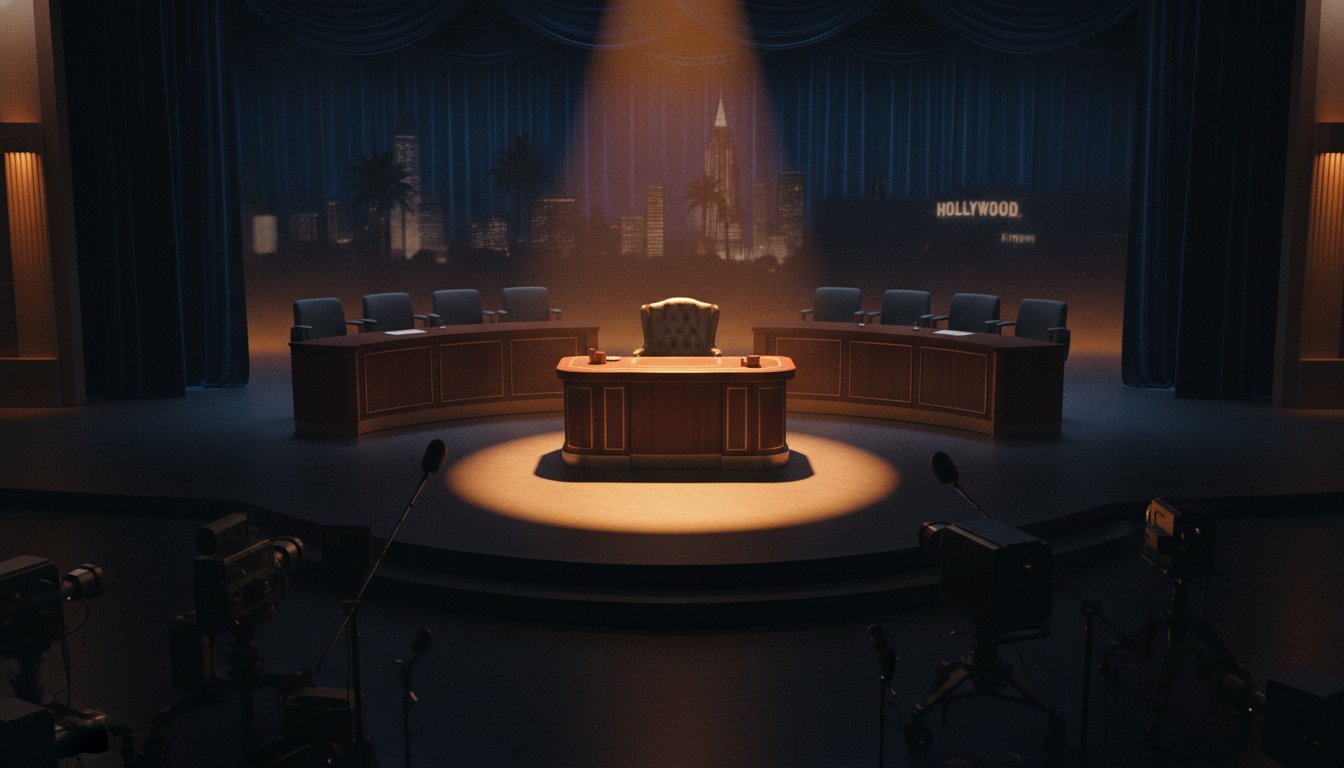
For thirty years, Johnny Carson didn’t just host a television program. He held a quiet, uncontested authority over American nightlife that no broadcaster before or since has managed to replicate. The Tonight Show with Johnny Carson wasn’t simply a talk show; it was a nightly ritual, a carefully orchestrated theater of charm and power that shaped careers, defined cultural moments, and turned eleven-thirty into the most coveted hour in broadcasting.
You already sense that Carson was something special. The clips, the impressions, the reverent way veterans of the industry still speak his name all confirm it. But the full story, the one that explains how he held that throne for three decades, is scattered across memoirs, archival interviews, and industry post-mortems that most people never find in one place.
This piece changes that. Here, you’ll discover how Carson transformed a simple late-night format into a genuine institution, how the power dynamics between host and guest shaped Hollywood careers, and where you can explore the archives of his remarkable run today. Consider this your definitive guide to the man who made late night matter.
Key Takeaways
- The Tonight Show with Johnny Carson didn’t just entertain — it operated as a carefully constructed power structure, and understanding its mechanics reveals why no successor has fully replicated its cultural authority.
- A single appearance on Carson’s panel could permanently alter a comedian’s or actor’s career trajectory, and you’ll discover the subtle, almost invisible signals he used to anoint the next generation of stars.
- Carson’s 1972 decision to relocate the show from New York to Burbank was far more than a logistical move — it fundamentally redirected the gravitational pull of American celebrity culture for the next two decades.
- The finale of May 22, 1992 stands as one of the most emotionally deliberate exits in broadcast history, and the story behind why Carson chose to face it virtually alone is more revealing than most obituaries ever captured.
- From his Nebraska radio roots to his last bow in Burbank, Carson’s thirty-year reign offers a masterclass in the architecture of sustained cultural dominance — one that scholars and fans of classic television are still decoding today.
The Dawn of the Carson Era: Inheriting the Tonight Show Throne
On the evening of October 1, 1962, a thirty-six-year-old former game show host from Corning, Nebraska stepped behind a desk at Studio 6B in Rockefeller Center and quietly changed the architecture of American broadcasting. There was no grand announcement, no coronation. Johnny Carson simply sat down, smiled that measured Midwestern smile, and began talking. What followed over the next thirty years would transform the tonight show with johnny carson into something no network executive had dared to imagine when they first handed him the keys.
The handover itself was anything but smooth. Jack Paar, Carson’s predecessor, had spent six years turning the Tonight Show into a theater of raw nerves and public grievances. Paar wept on air. He feuded with NBC censors. He walked off the set mid-broadcast in 1960 over a joke the network had cut without his knowledge. Audiences either loved the volatility or exhausted themselves keeping up with it. By the time Paar delivered his farewell in March 1962, the show had become inseparable from his emotional turbulence, and NBC faced a question that had no obvious answer: who replaces a force of nature?
Jack Paar vs. Johnny Carson: A Study in Contrast
Where Paar performed his feelings, Carson concealed his. That discipline, cultivated through years of radio work at stations across Nebraska and Iowa, gave him an almost uncanny ability to absorb tension without broadcasting it. His “less is more” philosophy wasn’t restraint for restraint’s sake; it was a deliberate technique that made audiences lean forward rather than brace themselves. The opening monologue evolved under Carson into something closer to a nightly editorial cartoon, a crisp, precise summary of the day’s absurdities that positioned him as the smartest, most composed man in any room.
NBC executives weren’t entirely convinced. Internal skepticism about Carson’s “midwestern” sensibility circulated in the months before his debut, with some network brass questioning whether his particular brand of cool, ironic charm could hold a coastal audience accustomed to Paar’s operatic swings. That skepticism evaporated quickly, though not immediately. The first episode, now famously lost to history due to tape recycling practices of the era, featured Groucho Marx, Joan Crawford, and Tony Bennett. What survives is only the memory of those who were there.
The Early New York Years: 1962–1972
Studio 6B at 30 Rockefeller Plaza carried its own gravitational pull during those first ten years. The New York theater world was close enough to influence guest bookings heavily, and Carson’s early panels reflected a Broadway sensibility: playwrights, novelists, jazz musicians, and stage actors shared the couch with comedians still working the club circuit. Skitch Henderson anchored the band during the earliest years before Doc Severinsen eventually claimed that role and became one of the show’s most beloved recurring personalities.
For a comprehensive chronology of the show’s format, notable guests, and production history during this foundational decade, The Tonight Show Starring Johnny Carson on Wikipedia provides a useful structural overview, though it captures little of the human tension that made those early broadcasts so consequential. The real story of those New York years was Carson quietly, methodically learning how much power a composed man could accumulate simply by never letting anyone see him sweat.
The Anatomy of an Icon: Decoding the Tonight Show Format
Every element of the Tonight Show with Johnny Carson was load-bearing. Nothing existed by accident. The desk, the couch, the opening trumpet fanfare, the precise timing of Ed McMahon’s introductory bellow — each component served a structural function that went far deeper than television convention. To watch old broadcasts casually is to miss the architecture entirely. To study them is to understand why the format held for thirty years while everything around it changed.
The Monologue: Intimacy at Industrial Scale
Carson’s opening monologue was, at its core, a trust exercise performed nightly before thirty million strangers. The self-deprecating jokes weren’t humility; they were a carefully calibrated signal that he was one of them, not above them. When a joke landed, the room confirmed it. When one died, Carson’s slow burn, the slight tilt of the head, the resigned glance toward the band, became its own punchline. He transformed failure into performance, which meant he genuinely couldn’t lose. That’s not a personality trait. That’s a technique.
The physical geography of the set reinforced every power dynamic the show depended on. Carson’s desk sat on a raised platform, subtly higher than the guest couch. Guests walked toward him, crossed his territory, and sat to his left, never quite at his level. The arrangement wasn’t accidental stagecraft; it was a visual grammar that told audiences, before a single word was spoken, exactly who held authority in this room.
The Sidekick Dynamic: Ed McMahon’s Strategic Importance
Ed McMahon is often reduced to the man who said “Heeeere’s Johnny,” but that reading undersells his function almost completely. McMahon was the show’s emotional thermostat. His laugh gave audiences permission to laugh. His visible delight at a guest’s story signaled that the moment was worth their attention. Carson could remain cool, measured, even slightly aloof, precisely because McMahon radiated warmth from the bandstand. Together, they created a temperature that felt effortlessly comfortable. Separately, neither would have produced the same effect.
Doc Severinsen and the NBC Orchestra completed the emotional ecosystem. Severinsen’s band didn’t merely fill transitions; it editorially commented on them. A sting could punctuate a joke. A warm swell could ease a guest’s nerves. The orchestra functioned as a second laugh track, one with considerably more musical intelligence.
Recurring Characters and the Art of the Sketch
The sketch characters Carson inhabited across three decades revealed something the monologue couldn’t: his willingness to disappear into a role while remaining unmistakably himself. Three characters defined this quality most sharply:
- Carnac the Magnificent: A turbaned mystic who delivered the answer before reading the question sealed inside an envelope. The bit’s genius was structural. The joke lived in the reversal of logic, and Carson’s deadpan commitment to the character’s wounded dignity when McMahon disrupted the rhythm became the real source of the humor.
- Art Fern and the Tea Time Movie: A sleazy local television pitchman hawking cut-rate products between film segments. The character was a direct satire of the very medium Carson occupied, which gave it an almost subversive quality. He was mocking television from inside television’s most powerful chair.
- Aunt Blabby and Floyd R. Turbo: Both characters drew from the midwestern archetypes Carson understood instinctively from his Nebraska upbringing. Aunt Blabby, the sharp-tongued elderly woman, and Floyd R. Turbo, the proudly uninformed everyman, tapped into a vernacular authenticity that coastal television rarely captured without condescension.
The Invisible Producer: Carson’s Control Over the Script
Fred de Cordova produced the show for nearly two decades, and his relationship with Carson was one of studied deference to a host who knew exactly what he wanted. The monologue writing process was rigorous: a staff of writers submitted material each day, Carson reviewed and revised it personally, and what survived that filter reflected his sensibility alone. He didn’t write every joke, but every joke that aired had passed through his judgment. Understanding how Johnny Carson prepared his monologue — the daily editorial discipline, the red pen, the ruthless filtering of hundreds of submitted jokes — reveals why that nightly opening felt so effortlessly precise while being anything but accidental.
His policy of avoiding pre-show conversation with guests is now legendary among broadcasting scholars. Carson deliberately stayed away from the green room so that his reactions on camera would be genuine. It was a discipline that protected the show’s most valuable asset: the appearance of authentic discovery happening in real time. Audiences sensed the difference, even if they couldn’t name it.
Understanding these mechanics transforms how you watch the archival footage. For readers who want to go deeper into the production history and interpersonal dynamics that shaped the golden age of late night, The Late Desk’s coverage of classic television offers the kind of contextual analysis that surface-level summaries rarely provide.
The Carson Bump: Power Dynamics and the Making of Legends
There was a moment that every comedian of the 1970s and 1980s knew by name, even if they couldn’t quite describe it. Six minutes. That was the standard slot for a stand-up set on the tonight show with johnny carson, and those six minutes carried more transformative weight than a decade of club dates, regional television appearances, or even a well-reviewed HBO special. The industry had a phrase for what happened next: the Carson Bump. It wasn’t hyperbole. It was cause and effect, documented in booking ledgers and box office receipts across thirty years of broadcasting history.
What made the bump real wasn’t simply the audience size, though thirty million nightly viewers was a number no other platform could approach. It was the signal Carson himself sent after a set concluded. If he laughed genuinely, that mattered. If he leaned forward and pointed at the comedian with that quiet, approving nod, that mattered more. But the gesture that every performer prayed for was the invitation to cross the stage and sit on the couch beside him. That walk, those fifteen feet from the performance mark to the guest chair, was the industry’s most visible coronation ritual.
Comedians and the Couch: The Ultimate Validation
The criteria for receiving that invitation were never published, never formalized, and never explained. Carson simply knew. What he was looking for, based on the accounts of writers and producers who worked alongside him, was a performer who had controlled the room rather than chased it. Desperation read instantly on that stage. Confidence, even when masked by self-deprecation, read just as clearly.
The case studies are instructive. Jerry Seinfeld’s 1981 debut is perhaps the most analyzed six minutes in stand-up history: precise, unhurried, and structured with the kind of internal logic that Carson recognized as genuine craft. The invitation to the couch followed. Roseanne Barr’s 1985 appearance carried a different energy entirely, raw and confrontational, but Carson’s approval was unambiguous. Drew Carey’s early appearances followed a similar arc, a performer who arrived with a fully realized point of view rather than a collection of jokes. Carson didn’t anoint personalities. He confirmed them.
The psychological pressure attached to a Tonight Show debut was, by nearly every performer’s account, unlike anything else in the profession. Comics who had worked confidently for years described a particular paralysis in the days leading up to their set. The stage itself seemed to recalibrate the stakes.
Late Night TV Power Dynamics: Carson as the Kingmaker
Carson’s authority extended well beyond the couch. Understanding the full architecture of his dominance requires looking at the late night tv power dynamics that Carson engineered with remarkable strategic patience. His 1980 contract negotiation with NBC produced something almost without precedent: ownership of the show’s archive. Carson didn’t just host the program. He controlled its history, which is precisely why so little of the early footage is freely available today.
His leverage over NBC was structural. When Carson threatened to walk, the network faced an existential crisis in its most profitable time slot. ABC and CBS launched repeated challenges across the 1970s and 1980s, none of which came close to breaking his dominance. The reason wasn’t simply ratings; it was that Carson had become the slot itself. Audiences didn’t choose between late-night programs. They chose between Carson and sleep.
Then there was Joan Rivers. For years, she was his most frequent guest host, the clearest signal of his personal approval. When she accepted a competing hosting deal with Fox in 1986 without telling him directly, the relationship collapsed permanently. Carson’s response was characteristically quiet and absolute: she was never invited back. The ban lasted beyond his tenure, beyond her career peak, and well into the era when such grudges should have dissolved naturally. It didn’t. That’s not a personal anecdote. That’s a demonstration of how completely Carson’s personal taste functioned as industry infrastructure.
The Burbank Shift and the 1970s Cultural Pivot
In May 1972, Johnny Carson did something that seemed, on the surface, like a simple change of address. He moved the tonight show with johnny carson from Studio 6B at 30 Rockefeller Center to NBC’s Studio 1 in Burbank, California. The network framed it as a logistical convenience. Carson understood it as something considerably more strategic. By planting the show inside the gravitational field of Hollywood, he didn’t just change his commute. He redirected the entire cultural orbit of American celebrity for the next two decades.
New York had given the show its intellectual credibility. Broadway playwrights, jazz musicians, and novelists had populated the early guest panels with a certain literary weight. Burbank offered something different: proximity to the film studios, the publicists, and the carefully managed celebrity machinery that was rapidly becoming the dominant currency of American popular culture. The move wasn’t a retreat from sophistication. It was a recognition that sophistication was migrating west, and Carson intended to be there when it arrived.
The 1970s accelerated that transformation. As Hollywood’s studio system loosened and the blockbuster era began reshaping what audiences wanted from their entertainment, the Tonight Show became the preferred launchpad for film campaigns, album releases, and the management of public image at a scale the New York years had never demanded. Carson’s desk became, in effect, the most visible green room in the entertainment industry.
The Studio 1 Experience: A New Era of Polish
The Burbank studio brought technical capabilities that Studio 6B simply couldn’t match. Lighting rigs, set design, and production infrastructure all improved measurably, producing what industry observers came to call the “Burbank Look”: a warmer, more cinematic visual register that suited the Hollywood adjacency perfectly. This production shift is documented as part of the broader history of late night television, which traces how the westward move fundamentally altered the aesthetic grammar of the format. The California setting also made elaborate recurring segments more feasible, including Jim Fowler’s wildlife appearances, which became appointment television precisely because the production team could accommodate the logistical complexity that live animals demand. For a closer look at what unfolded when the curtains first opened at NBC’s Studio 1, the story of Johnny Carson’s first show in the LA studio — from the legendary guest list to the nervous energy behind the scenes — captures the high-stakes drama of that inaugural Burbank broadcast in remarkable detail.
Guest Hosts and the Search for a Successor
Carson’s frequent absences during the 1970s and 1980s created a rotating audition that nobody officially acknowledged as one. Bob Newhart, David Brenner, and Joan Rivers each cycled through the guest host role, with Rivers eventually becoming the most visible candidate by sheer frequency. The subtext was unmistakable to anyone watching the industry closely: Carson was, deliberately or not, stress-testing potential heirs.
By the late 1980s, that subtext had become an open wound. Jay Leno and David Letterman both understood that the throne would eventually require a new occupant, and both positioned themselves accordingly. Carson observed the maneuvering with characteristic detachment, never publicly endorsing either man, never clarifying his preference. It was a silence that spoke volumes.
Then came the 1979 to 1980 contract renegotiation. Carson used his leverage to compress the show from ninety minutes to sixty, a reduction that looked like a concession but functioned as a refinement. A tighter hour meant tighter editorial control. Less filler. More precision. The show didn’t shrink. It concentrated.
For readers who want to trace how these production decisions shaped the broader competitive landscape of late night, The Late Desk’s archive of classic television analysis maps the full arc of that evolution with the depth it deserves.
The Final Bow: Preserving the Carson Archive and Legacy
On the evening of May 22, 1992, the most influential desk in television history sat empty for the last time. Unlike the high-energy spectacles of modern farewells, the finale of the tonight show with johnny carson was a masterclass in restraint. There were no celebrities to interview, no new films to plug, and no sketches to perform. Instead, Carson spent those final sixty minutes speaking directly to his audience, anchored only by Ed McMahon and the collective memory of three decades. It was a broadcast that felt less like a variety show and more like a private conversation with thirty million people.
The emotional crescendo had actually occurred twenty-four hours earlier. On May 21, Bette Midler delivered a performance that remains the definitive elegy for the era. As she sat on the edge of the desk and serenaded Carson with “One for My Baby (and One More for the Road),” the show transcended its role as entertainment. It became a wake for a specific kind of American consensus. When Carson wiped away a tear, the country understood that the institutional weight he had carried for thirty years was finally being set down.
Accessing the Archives: A Guide for Fans
Because Carson had the foresight to secure ownership of his show’s tapes during his 1980 contract battle, the preservation of his work is remarkably comprehensive. The Carson Entertainment Group now manages this massive library, ensuring that the transition from analog tape to high-definition digital formats didn’t result in the loss of cultural history. Today, fans can find full episodes and curated, remastered clips through official streaming partners and the show’s dedicated digital presence. For historians and serious researchers, these archives are the “Gold Standard” for researching 20th-century celebrity culture — though navigating the full landscape of online television archives for researchers requires knowing which collections are verified historical assets versus casual fan uploads, a distinction that matters enormously when trying to locate specific scripts, guest logs, or production records from the Carson era.
The Immortal King: Why No One Can Replace Carson
The fragmentation of modern media has made it impossible for any successor to replicate Carson’s reach. In the current landscape of streaming and social media, no single host can command the unified attention of the entire nation. While modern hosts like Jimmy Fallon have adopted Carson’s penchant for games and sketches, and Stephen Colbert utilizes the sharp, news-driven monologue Carson perfected, they operate in a niche-driven world. Carson was the last host to preside over a truly national ritual.
His post-retirement silence only added to his mystique. By refusing to linger in the public eye or comment on the “Late Night Wars” that followed his departure, he maintained the dignity of the final exit. He understood that his role as the architect of the late-night format was secure. The tonight show with johnny carson wasn’t just a program; it was the blueprint for everything that followed, a thirty-year reign that defined the very rhythm of American life after dark.
The Throne Remains Unoccupied: What Carson’s Legacy Demands of Us Now
Thirty years of broadcasting. One unbroken cultural ritual. The tonight show with johnny carson didn’t just survive three decades of shifting tastes and industry upheaval; it defined them. Carson’s genius was architectural: he built a format so structurally sound that every host who followed him has been, in some measure, working from his blueprint.
Three truths emerge from his story that no amount of nostalgia can obscure. Power, when exercised with discipline, becomes invisible. Authenticity, even when carefully manufactured, is the only currency audiences won’t eventually reject. And the exit, handled correctly, can outlast the entire career that preceded it.
Carson understood all three. The question now is whether we understand them well enough to appreciate what we’re actually watching when we study his archive.
If this piece has sharpened your appetite for that kind of analysis, the deeper work is waiting for you. Explore The Late Desk’s curated archive of late-night history, where in-depth analysis of classic television power dynamics, golden age narratives, and expert commentary on the era Carson built are all gathered in one place. The story behind the story is always worth finding.
Frequently Asked Questions About the Tonight Show with Johnny Carson
How long was Johnny Carson on the Tonight Show?
Johnny Carson hosted the Tonight Show for exactly thirty years, from October 1, 1962 to May 22, 1992. That tenure makes him the longest-serving host in the program’s history by a considerable margin. To put it in perspective, he occupied that desk through six presidential administrations, the Vietnam era, Watergate, and the rise of cable television, outlasting every competitive challenge the networks could assemble against him.
Why did Johnny Carson ban Joan Rivers from his show?
The break came in 1986 when Rivers accepted a hosting deal with Fox for her own late-night program without informing Carson directly beforehand. He considered the move a personal betrayal, particularly given how frequently she had served as his guest host and how visible his professional endorsement had made her career. Carson’s response was swift and permanent: she was never invited back. The ban held for the remainder of his tenure and well beyond it.
Who was the first guest on Johnny Carson’s Tonight Show?
The debut episode on October 1, 1962 featured Groucho Marx, Joan Crawford, and Tony Bennett among its guests. Rudy Vallee and Mel Brooks also appeared that evening. Frustratingly for historians, the broadcast itself no longer exists in any complete form. NBC’s tape recycling practices of the early 1960s erased it, leaving only the recollections of those who were present in Studio 6B that night.
When did the Tonight Show move from New York to Burbank?
The show relocated from Studio 6B at 30 Rockefeller Center to NBC’s Studio 1 in Burbank, California in May 1972. The move placed the tonight show with johnny carson inside Hollywood’s orbit at precisely the moment the blockbuster film era was reshaping American celebrity culture. What looked like a logistical decision was actually a strategic repositioning that gave Carson direct proximity to the studios, publicists, and film campaigns that would dominate his guest panels for the next two decades.
Who were the most frequent guests on the Tonight Show with Johnny Carson?
Bob Hope, Don Rickles, David Brenner, and Joan Rivers (prior to 1986) were among the most regular presences on Carson’s couch. Comedian David Brenner held a particularly notable record for guest appearances across the show’s run. Beyond comedians, actress Angie Dickinson and talk show contemporary Buddy Hackett were fixtures. Carson’s preferences were consistent: performers who arrived with a fully realized point of view rather than simply a project to promote tended to earn return invitations.
What happened to the Tonight Show tapes from the 1960s?
A significant portion of the early broadcasts were lost due to NBC’s standard practice of erasing and reusing videotape, which was expensive and considered disposable at the time. The network didn’t yet understand that these recordings had lasting cultural or commercial value. Some footage survived through kinescope recordings or private copies, but large gaps remain in the archive from the New York years. This is precisely why Carson’s 1980 contract victory, which secured his ownership of subsequent tapes, proved so historically significant.
Why did Johnny Carson retire in 1992?
Carson never offered a single definitive explanation, which was entirely consistent with his character. He had quietly signaled to NBC in 1991 that the following season would be his last. Those close to the production noted that he had grown increasingly private throughout the late 1980s and seemed to resist the celebrity machinery the show required. At sixty-six, he appeared to want an exit on his own terms before the industry’s changing landscape could complicate that choice. He achieved it completely.
How can I watch old episodes of the Tonight Show with Johnny Carson?
Because Carson secured ownership of the show’s archive during his 1980 contract negotiations, the Carson Entertainment Group manages a substantial library of episodes and clips. Official streaming partnerships and the show’s dedicated digital channels offer curated, remastered content for fans. For broader historical context around what you’re watching, including the production decisions and power dynamics that shaped specific broadcasts, The Late Desk’s archive of classic television analysis provides the kind of interpretive depth that streaming metadata simply can’t offer.