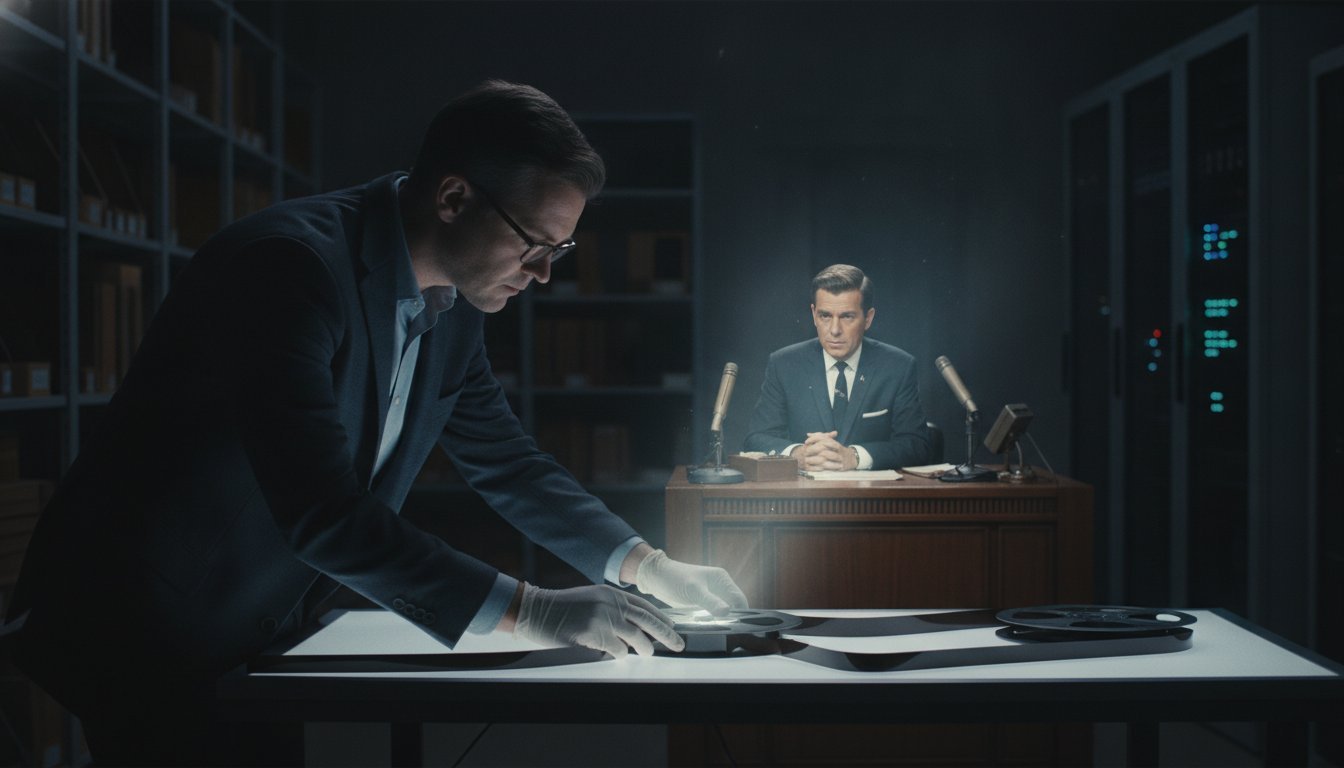
The disappearance of television history was never a matter of accidental fires or misplaced boxes; it was a cold, calculated industrial policy that turned thousands of hours of culture into magnetic dust. For decades, the search for lost late night tv episodes has felt like a ghost hunt, leaving fans to settle for flickering, low-quality clips recorded on primitive home equipment. It’s deeply frustrating to realize that the billion-dollar networks responsible for the golden age of entertainment often chose to erase their own legacies just to save a few dollars on the cost of reusable tape.
We share your reverence for these missing moments and the desire to see them restored to their original glory. In this exploration, you’ll discover the hidden history of the wiping era and meet the modern archivists who are using detective work to bring these vanished monologues back to light. We’ll examine which iconic episodes are gone forever, why the first decade of the Carson era remains a massive archival hole, and how you can support the efforts to preserve what remains of our collective late-night memory.
Key Takeaways
- Discover the industrial reality of “wiping,” where networks sacrificed irreplaceable history to save on the high cost of magnetic tape.
- Learn how the “Carson Clause” secured the King of Late Night’s legacy while leaving the archives of his predecessors in a state of decay.
- Understand the detective work involved in tracking down lost late night tv episodes through rare 16mm kinescopes and early home recordings.
- See how modern archivists use digital restoration and AI to breathe new life into recovered footage from the golden age.
The Myth of the Infinite Archive: Why Your Favorite Show Might Be Gone
In the modern era of on-demand streaming, we’ve developed a quiet, comfortable assumption that every piece of television history is safely tucked away in a climate-controlled vault. It’s a seductive idea. We imagine that every witty retort and every iconic guest entrance has been digitized and preserved for eternity. Unfortunately, for those of us hunting for lost late night tv episodes, it’s also a total fabrication. The reality of broadcasting history is far more fragile and far more tragic than the average viewer realizes.
We often imagine network executives as protectors of the arts. In reality, they were pragmatists managing a bottom line. To them, tape was a raw material, not a master recording. These missing broadcasts represent a specific, heartbreaking sub-genre of lost television episodes. They aren’t just missing files; they’re erased memories. This mindset birthed the concept of “ephemeral media,” where shows were intended to be watched once and forgotten. While we now live in an age where every social media post is backed up on multiple servers, the analog era was governed by the physical limitations of magnetic tape. Our digital comfort has created a dangerous blind spot regarding the survival of these older archives.
The Ephemeral Nature of the Talk Show
Late-night television was the ultimate disposable product. Executives viewed the format as “daily news” with a punchline rather than timeless art. Because the monologue relied on topical jokes about Nixon’s cabinet or the price of gasoline in 1974, the content felt instantly dated to the men in suits. There was no syndication market for a talk show episode from three weeks ago, let alone three years ago. Without a clear path to future profit, the tapes were seen as an unnecessary storage expense. They weren’t just ignored; they were systematically marked for destruction to make room for the next day’s broadcast.
The Cultural Cost of Missing Media
The tragedy isn’t just a missing joke; it’s the erasure of a vital historical record. Late-night guest interviews are often the only candid, long-form documentation we have of 20th-century icons in their prime. When an episode vanishes, we lose the raw, early performances of comedians who would eventually become legends. These gaps in the record also obscure the evolution of the talk show. It makes it difficult for historians to trace how a loose, radio-influenced format transformed into the polished, high-stakes machine we recognize today. Every missing frame of lost late night tv episodes is a lost thread in the fabric of our shared cultural legacy.
The “Wiping” Crisis: When Erasure Was an Industry Standard
The broadcast industry of the mid-20th century operated under a brutal logic of scarcity. While we now view the first decades of color television as a cultural treasure trove, the networks saw something else: a storage nightmare. The primary culprit in the disappearance of lost late night tv episodes was the sheer physical and financial weight of the technology itself. Tapes weren’t just recordings; they were high-value assets that had to be liquidated to keep the machinery of television running.
Economics vs. History: The 2-Inch Tape Dilemma
In the 1960s and 70s, the industry standard was the 2-inch Quadruplex videotape. These reels were massive, heavy, and prohibitively expensive, often costing upwards of $200 per hour of footage. When adjusted for inflation, a single night’s broadcast represented a capital investment of thousands of dollars. Storage rooms weren’t museums; they were warehouses where every square foot had to justify its existence to an accounting department. Wiping was the systematic reuse of magnetic tape for economic efficiency. Because the creative directors rarely held the keys to the tape vault, the decision to erase a legendary interview often came down to a clerk trying to balance a budget. The hunt for lost late night tv episodes remains a race against time and the legacy of these ledger-driven decisions.
The Legal Labyrinth of Late-Night
Even when a tape survived the magnetic eraser, it faced a gauntlet of legal restrictions that kept it off the air. Guest contracts during the 1960s were written for a world that didn’t include home video, let alone digital streaming. Networks found that re-airing an old episode required renegotiating dozens of individual clearances for actors, writers, and musicians. Music rights were particularly treacherous, as a single three-minute performance by a jazz legend could cost more to clear than the episode was worth in reruns. These complex late night tv power dynamics ensured that only the most commercially viable programs were protected, while everything else was left to rot or be recorded over.
The results were catastrophic for television history. The bulk of the Steve Allen and Jack Paar eras of The Tonight Show are gone. Even the first ten years of Johnny Carson’s tenure are largely a void, with only a fraction of those thousands of hours surviving in any watchable format. If you find this historical detective work fascinating, you can explore our deep dives into other archival television mysteries at your leisure. The erasure of these records wasn’t a mistake; it was a policy that prioritized the next quarter’s profits over the next century’s legacy.
Carson vs. The Pioneers: A Tale of Two Archives
The history of the late-night talk show is a tale of two halves: one preserved in pristine detail and the other reduced to a collection of rumors and grainy photographs. While Johnny Carson’s name is synonymous with the format, his dominance in our collective memory is as much a result of archival survival as it is of talent. Before Carson, men like Steve Allen and Jack Paar defined the medium, yet their contributions to the world of lost late night tv episodes are staggering. The contrast between these eras reveals a heartbreaking truth about show business: you only become a legend if someone remembers to save the tape.
The boundary between history and oblivion is often marked by the year 1972. Before the production moved from New York to California, the survival of a broadcast was left to the whims of network clerks and the limitations of storage space. Even Carson’s first decade, the formative years between 1962 and 1972, is largely a void. Thousands of hours of television, featuring some of the most significant cultural figures of the 20th century, were treated as disposable. This creates a lopsided view of the genre, where the “King of Late Night” stands tall simply because his predecessors were allowed to vanish into the magnetic ether. The forensic mission of recovering lost Johnny Carson episodes from this missing decade has become one of the most urgent and high-stakes pursuits in television archival history.
The Missing Years of Jack Paar
Jack Paar was a master of the emotional breakdown and the intimate conversation. He brought a raw, unpredictable energy to the screen that transformed the medium from a variety show into a forum for personality. Unfortunately, because NBC didn’t see the value in saving “yesterday’s news,” only a handful of Paar’s legendary Tonight Show run remains. This archival void makes it difficult to fully appreciate how he shaped the Tonight Show hosts who followed in his footsteps. We are left with mere fragments of a man who once held the entire country captive with nothing but a microphone and a stool.
Johnny Carson: The Guardian of His Own Legacy
Carson was more than a comedian; he was a shrewd businessman who understood the power of ownership. The pivotal moment came in 1980 when he negotiated the “Carson Clause,” a contract that granted him full ownership of his tapes. By moving the show to Burbank and taking control of the archive through Carson Productions, he ensured that the Tonight Show with Johnny Carson would be preserved for future generations. This foresight is the reason his “Best Of” specials still populate our screens while other lost late night tv episodes remain the stuff of archival myth. He didn’t just host the show; he curated his own place in history.

The Digital Resurrection: How Lost Episodes Are Being Found
The narrative of late-night television history often feels like a sequence of eulogies for vanished master tapes. However, the story of lost late night tv episodes has taken a surprising turn in recent years as a loose coalition of historians, private collectors, and tech-savvy fans has begun to piece the puzzle back together. This resurrection isn’t happening in the high-tech laboratories of major networks, but rather in the dusty basements of former station employees and the forgotten corners of international film vaults. The search has evolved into a sophisticated game of cultural detective work where the smallest fragment of a recording can restore a legend’s legacy.
The global nature of the television industry has proven to be a vital asset in this hunt. While American networks were busy wiping their masters, they were simultaneously shipping copies of those same programs to broadcasters in Australia, Canada, and the United Kingdom. In many cases, these international syndication hubs lacked the aggressive wiping policies of their U.S. counterparts. A forgotten 16mm reel in a Sydney warehouse or a misplaced tape in a London archive can suddenly fill a decade-long gap in the American record. These recovered moments are then meticulously digitized by the “Lost Media” community, ensuring that once a monologue is found, it will never be erased again. Researchers looking to navigate these fragmented institutional repositories can benefit from a structured approach to television history for scholars, which maps out the major archival collections holding these rare surviving materials.
Kinescopes: The Low-Tech Savior
Before the advent of high-quality videotape, the industry relied on a surprisingly primitive method to preserve live broadcasts: the kinescope. This process involved placing a 16mm or 35mm film camera in front of a high-resolution television monitor to record the live feed as it aired. While the image quality was often grainy and lacked the luster of the original broadcast, these films were frequently the only record of “live” late-night shows from the 1950s. A 1950s kinescope is a grainy, physical film strip subject to chemical decay, whereas a modern digital master is a lossless stream of binary data. Despite their flaws, these flickering reels have saved the only surviving footage of early pioneers like Steve Allen, providing a window into a world that would otherwise be entirely lost to time.
The Beta-Max Brigades
The most significant turning point in the recovery of lost late night tv episodes arrived in the late 1970s with the introduction of home recording technology. Early adopters of Betamax and VHS systems unintentionally became the most important media archivists in history. These home enthusiasts weren’t trying to save culture; they simply wanted to watch a missed interview after work. Decades later, these tapes are being pulled from garages and attics, often containing the only extant copies of 1970s and 80s broadcasts that the networks destroyed. The process of cleaning and digitizing these decaying magnetic tapes is a race against “sticky-shed syndrome,” a chemical breakdown that can turn a rare interview into a gummed-up mess. You can learn more about the efforts to save these fragile records by exploring our archival television guides today. Every recovered tape is a victory over the industry’s short-sightedness.
Preserving the Golden Age: Why the Search Continues
The quest to recover lost late night tv episodes is more than a simple exercise in nostalgia; it’s a vital effort to restore the cultural dignity of a vanished era. While the “wiping” policies of the past left us with significant gaps, the tools of the future are finally giving us a way to bridge them. Digital restoration has moved beyond mere cleaning, as sophisticated AI algorithms are now being used to upscale low-quality recovered clips from grainy kinescopes or decaying home tapes. These technologies don’t just sharpen the image; they reclaim the subtle facial expressions and comedic timing that were once blurred by decades of neglect.
We’ve reached a point where the networks have largely abdicated their roles as historians, leaving the heavy lifting to a decentralized network of enthusiasts. Modern fans have become the true curators of collective memory, proving that a dedicated community can often achieve what a corporate boardroom won’t. By treating every flickering frame as a piece of a larger puzzle, we ensure that the “golden age” of entertainment isn’t just a phrase in a textbook, but a living, breathing archive. If you’re interested in the technical side of this preservation, you can support online television archives for researchers to help keep this history accessible.
The Future of the Past
The institutional backbone of this movement remains with organizations like the Paley Center for Media, which provides a sanctuary for thousands of hours of rare broadcasts. However, the landscape of research is shifting toward decentralized platforms. Sites like YouTube and the Internet Archive have democratized the search for lost late night tv episodes, allowing a researcher in London to view a clip found in a basement in Chicago. At The Late Desk, we remain committed to uncovering the “story behind the story” of these missing media fragments, documenting not just the shows themselves, but the industry power dynamics that led to their disappearance.
How You Can Help the Hunt
The next great discovery likely won’t happen in a corporate vault; it’ll happen at an estate sale or in the back of a personal collection. When you’re scouting for rare media, look for unmarked 16mm reels or early home-recorded tapes with handwritten labels of specific guests or dates. There’s an ethical tension in sharing this content, as copyright laws often conflict with the urgent need for preservation. Our philosophy is that the historical value of these “lost” moments often outweighs the legal technicalities of a 50-year-old contract. We invite you to continue your journey through the deep history of the desk here at The Late Desk, where every recovered monologue is a victory for the fans who never stopped looking.
Reclaiming the Vanished Monologue
The disappearance of television history was a calculated industrial policy, but the final chapter hasn’t been written. We’ve moved from the heartbreak of the wiping era to a new age of digital resurrection, where the detective work of fans and archivists is slowly filling the voids left by early networks. While the first decade of the color era remains largely a shadow, every newly discovered kinescope or home recording proves that these cultural milestones don’t have to be gone forever.
At The Late Desk, we provide the deep-dive historical analysis and expert curation necessary to understand the power dynamics that shaped the golden age. Our insider perspective into the archives helps researchers and fans alike navigate the complex legacy of the medium. We invite you to explore the hidden history of the archives at The Late Desk to see how we’re documenting the search for lost late night tv episodes. The search continues, and with every fragment found, the legends of the desk grow a little more vivid.
Frequently Asked Questions
Why were so many old Tonight Show episodes erased?
Network executives erased these recordings because they viewed magnetic tape as a reusable asset rather than a historical record. In the 1960s, a single reel of 2-inch tape cost approximately $200, an expense that accounting departments couldn’t justify for a show they deemed “dated” by the next morning. Without a syndication market for topical comedy, the decision to wipe the masters was seen as a simple matter of industrial efficiency.
Does Johnny Carson have any lost episodes?
Nearly the entire first decade of Johnny Carson’s tenure is missing from the official record. While the King of Late Night famously secured his archive after moving to California in 1972, the vast majority of his New York broadcasts from 1962 to 1972 were erased by NBC. These lost late night tv episodes represent a significant gap in the history of American comedy, leaving only a few dozen fragments of his early years. The ongoing effort of recovering lost Johnny Carson episodes from this missing decade relies on forensic archival methods and the discovery of rare home recordings and international syndication copies.
What is a kinescope and how did it save lost TV?
A kinescope is a 16mm or 35mm film recording made by pointing a camera directly at a high-resolution television monitor. Before videotape became the industry standard, this was the only way to record a live broadcast for delayed airing in different time zones. These flickering reels became the accidental saviors of television history, preserving the only surviving evidence of shows that networks later erased from their expensive magnetic tapes.
Are there any full episodes of Steve Allen’s Tonight Show left?
Only a tiny fraction of Steve Allen’s pioneering run from 1954 to 1957 survives today. Most of what remains exists in the form of grainy kinescopes rather than high-quality master tapes. While the UCLA Film & Television Archive holds some rare complete broadcasts, the bulk of the thousands of hours Allen produced was lost to the standard industry practice of tape reuse. His legacy lives on primarily through these scattered fragments.
Why can’t I find David Letterman’s early NBC shows online?
The absence of Letterman’s NBC era from digital platforms is primarily due to a thicket of music licensing and guest clearance issues. NBC retains ownership of the Late Night library, but the cost of renegotiating residuals for every writer, actor, and musical guest makes a full digital release prohibitively expensive. Until the network sees a clear path to profit that outweighs these legal fees, the early 80s remain locked in the vault.
What is the most famous “lost” interview in late-night history?
One of the most sought-after moments is Judy Garland’s final 1968 appearance on The Tonight Show, which vanished for decades before fragments resurfaced. Another legendary “lost” moment is the full, unedited footage of Jack Paar’s 1960 walk-off after NBC censored a joke about a “water closet.” These moments have achieved a mythical status among collectors, representing the raw, unpredictable energy that once defined the late-night format.
How do archivists find tapes that were thought to be destroyed?
Archivists act as cultural detectives, scouring international syndication vaults in countries like Australia and the United Kingdom where wiping policies were less aggressive. Because American networks often shipped film copies of lost late night tv episodes to foreign markets, these “orphaned” reels occasionally survive in forgotten warehouses. They also rely on private collectors who unintentionally saved history by recording broadcasts on early home video systems in the late 1970s.
Is it legal to upload found lost media to YouTube?
Uploading lost media to YouTube is a legal gray area that technically violates network copyrights. While companies like NBC or CBS own the intellectual property, they often tolerate the presence of rare clips if the historical significance is high and the footage isn’t commercially available. However, these uploads are always subject to sudden “takedown” notices if a network decides to exercise its rights or begins its own archival restoration project.